
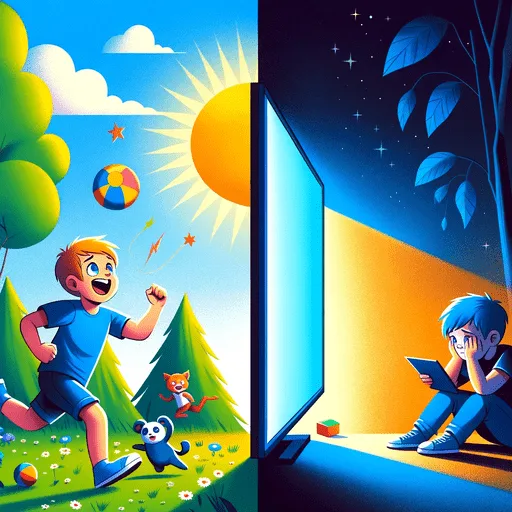
Children today grow up in a world where digital media, social media, and screens are everywhere. After all of that the question arises in every parent’s mind: what is the impact of screen time on children?
- Is screen time harmful or even beneficial?
- When does it become a burden on the brain, sleep, and development?
- And above all: How much is still healthy, and how can parents create a good balance?
In this blog we will guide you about the impact of screen time on children, specific recommendations for screen time according to age, and other practical tips for everyday life.
How much screen time is healthy?
In many families with children, there are regular discussions about screen time. Many parents are unsure when they should literally pull the plug. The WHO provides the following recommendations for guidance:
- 0 to 3 years: Avoid screen media as much as possible.
- 3 to 6 years: Screen time should be 45 minutes daily
- 6 to 10 years: Screen time should be 45 to 60 minutes daily
- 10 to 12 years: Screen time should be 1 hour daily
- 13 to 14 years: Screen time should be 1.5 hours daily
- 15 to 16 years: Screen time should be 2.5 hours daily
The most important effects of too much screen time on children
1. Cognitive & academic development
- Excessive consumption can impair concentration and memory performance.
- Less in-depth processing of information
- Rapidly changing stimuli make focused learning more difficult.
2. Exercise & Health
- Longer screen time leads to less physical activity
- Increase in obesity, postural defects, motor deficits
3. Social & emotional development
- Less real interaction leads to poorer empathy development
- Increased irritability, frustration during breaks from technology
- Increased emotional dependence on digital stimuli
4. Language & Communication
- Fewer opportunities for language development leads to delayed language development in toddlers
- Passive consumption for example Youtube reduces active speaking.
Warning signs: When screen time becomes a burden
Look out for the following signs:
- Your child becomes irritable or aggressive when the screen is turned off.
- It is less interested in other activities
- It constantly wants to access the device , even without a specific reason.
- The content is being used secretly or concealed.
- Sleep, school performance, or mood deteriorate significantly.
At the latest then it’s time for an open discussion and a new media regulation.
What parents can do
To promote a healthy use of digital devices, the Children’s Health Foundation recommends clear rules:
- Parents and children both avoid screens as much as possible at least two to three hours before going to sleep.
- Keep away your mobile phones from the bedroom, especially at night.
How screens impact on emotion regulation?
We will guide you about how screens affect your children emotionally. Emotion regulation refers to the ability to recognize, evaluate, and adjust one’s own feelings. Emotion regulation is a skill that children particularly develop in preschool age, when they come into contact with more people.
Practical tips for parents to keep their children away from screens
Don’t stop your children directly from using screens because they will do the opposite every time. You have to practically show them there are other things out there worth doing. Now you are thinking about how this can be done? Our great tips can help you and your child spend less time in front of the screen:
- Give your child attentive and quality time.
- Fix screen time of your children
- Let your child play with other kids.
- Parents should encourage their children that they can do anything.
Conclusion about the impact of screen time on children
If you feel your child is spending too much time in front of a screen, you’re not alone. You don’t have to worry because this guide will guide you about what factors affect your children by using a screen. We give your tips about the productive thing you can do with your children and how you can prevent them from using screens. Tell them that there are other productive things they can do rather than use a screen that makes them better in every way. Encourage your children about the things they are passionate about.