
Growth & Development · Johar Town, Lahore
Child Growth & Development Assessment in Lahore
Careful measurement of height, weight and head size, plotted on growth charts, together with a review of milestones – so slow growth, poor weight gain or developmental concerns are picked up early.
- 0–18 Years of age
- FCPS Child specialist
- Mon–Sat 7am – 10pm
 Height, weight & milestones
Quick answer
A child growth and development assessment checks whether your child’s height, weight and head size are increasing at a healthy, steady rate on a growth chart, and whether skills such as walking, talking and playing are appearing at the expected ages. It is useful when a child seems shorter or thinner than peers, is gaining weight slowly, or seems behind in milestones.
Introduction to Child Growth and Development
Growth is one of the best overall signs of a child’s health. When a child is well fed, healthy and well cared for, they usually grow along a steady path on a growth chart. Development – the skills a child learns, from smiling and sitting to talking, running and learning at school – happens alongside physical growth. Looking at both together gives the clearest picture of how a child is doing.
How We Can Help
Growth Monitoring
Accurate measurements tracked on growth charts over time.
- Height and weight checks
- Head circumference
- Growth chart review
Growth Concerns
Assessment when growth is slower than expected.
- Poor weight gain
- Short stature
- Thin or underweight children
Development Review
Checking milestones and early skills.
- Motor milestones
- Speech and social skills
- Advice and follow-up
Understanding Normal Growth Patterns
Children grow fastest in the first year, when most babies roughly triple their birth weight. Growth then slows to a steadier pace through the preschool and school years, before a final growth spurt during puberty. Every child has their own normal size, influenced strongly by the parents’ heights. What matters most is that a child keeps following their own curve – a child who is small but growing steadily is usually healthy, while a child who drops across growth lines needs assessment.
Height and Weight Monitoring
Accurate measurements are essential. Babies are measured lying down and older children standing, without shoes, and weight is checked on a calibrated scale. Measurements are plotted on age- and sex-appropriate growth charts, and body mass index (BMI) is used from about two years of age. A single measurement gives limited information; repeated measurements over months show the true growth pattern. Bring any earlier weight or height records you have.
Poor Weight Gain in Children
Poor weight gain – sometimes called faltering growth – means a child is not gaining weight as expected for their age. Common reasons include not taking in enough food or milk, feeding difficulties, frequent illnesses, diarrhoea, and less commonly underlying conditions that affect absorption or increase the body’s needs. Assessment looks at the child’s diet and feeding pattern, illness history, examination findings and, when needed, simple tests. Read more about iron deficiency and low energy.
Short Stature and Growth Concerns
Many short children are simply following their family’s pattern (familial short stature) or are “late bloomers” who will catch up later (constitutional delay). A smaller number have a medical reason such as long-standing nutritional problems, hypothyroidism, growth hormone deficiency, chronic illness or a genetic condition. Warning signs include falling across height lines, growing much more slowly than peers, or short stature with other symptoms. A careful history, the parents’ heights, the growth pattern and sometimes a bone-age X-ray or blood tests help find the cause, with referral to a pediatric endocrinologist when needed.
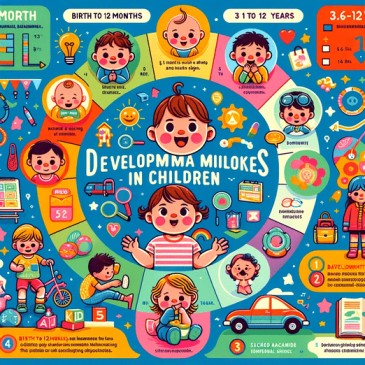
Developmental Milestones by Age
- By about 2 months: smiles at people and follows faces.
- By about 6 months: rolls over, reaches for toys and babbles.
- By about 9–12 months: sits without support, crawls or pulls to stand, and says simple sounds like “mama” or “baba”.
- By about 18 months: walks independently and uses several words.
- By about 2 years: joins two words together and runs.
- By about 3 years: speaks in short sentences and plays with other children.
Children vary, and there is a range of normal for each skill. See stages of child development.
Common Developmental Concerns
Parents most often notice delayed speech, late walking, clumsiness, limited eye contact or social interaction, difficulty with attention, or loss of skills a child previously had. Loss of skills at any age always needs prompt assessment. For a detailed review of milestones, speech and behaviour, a dedicated developmental assessment may be recommended.
Factors Affecting Child Growth
- Nutrition: enough energy, protein, iron, zinc, calcium and vitamins.
- Genetics: parents’ heights and family growth patterns.
- Health: repeated infections, diarrhoea, asthma, and long-term illnesses.
- Hormones: thyroid and growth hormones and the timing of puberty.
- Sleep and activity: regular sleep and daily physical play support healthy growth.
- Birth history: babies born early or small may follow a different early pattern.
How a Pediatrician Assesses Growth
- History: birth details, feeding and diet, illnesses, family heights and puberty timing.
- Measurement: height or length, weight, head circumference and BMI, plotted on growth charts.
- Examination: a full physical check for signs of illness, nutritional problems or hormonal causes.
- Tests if needed: such as blood count, thyroid tests or bone age, chosen according to findings.
- Plan: nutrition advice, treatment of any cause, and a follow-up date to recheck growth.
When Should Parents Seek an Assessment?
- Your child is much shorter or thinner than other children of the same age, or than expected from family heights.
- Your child has stopped gaining weight or is losing weight.
- Height or weight has dropped across growth chart lines.
- Your child seems behind in milestones or has lost skills.
- Growth concerns come with tiredness, poor appetite, frequent infections or long-lasting diarrhoea.
Growth & Development: Questions Parents Ask
How do I know if my child is growing normally?
A child who keeps following their own line on a growth chart is usually growing normally, even if they are smaller or larger than friends. Repeated measurements over several months are more useful than a single check.
My child is short. Should I be worried?
Many short children are healthy and simply take after their family or will catch up later. An assessment is advised if your child is falling across growth lines, growing much more slowly than peers, or has other symptoms.
What causes poor weight gain in children?
Common causes include not eating enough, feeding difficulties, picky eating, frequent infections and diarrhoea. Less often, an underlying medical condition is responsible, which is why a medical assessment is helpful.
At what age should a child start walking and talking?
Most children walk by about 12 to 15 months and say their first words around 12 months. If a child is not walking by 18 months or not using words by 16 to 18 months, an assessment is recommended.
Do growth supplements or tonics increase height?
There is no tonic that increases height in a healthy child. Good nutrition, sleep and activity support growth, and any treatment should be guided by the cause found during assessment.
How often should my child's growth be checked?
Babies are checked frequently in the first year. Older children benefit from at least a yearly measurement, or more often if there is a growth concern.
Related Pediatric Services
View all 24 pediatric services →
Helpful Guides for Parents
About Your Child Specialist
Dr. Muhammad Zeeshan Khan, MBBS, FCPS is a consultant child specialist (pediatrician) and Associate Professor at Children’s Hospital Lahore, with 24 years of experience in paediatrics and a private clinic at 7, Block-M, Phase 2, Johar Town, Lahore. His listed services include assessment of growth problems, short stature and child nutrition, with referral to sub-specialists when specialised tests are needed.
Book an Appointment Call 0311-6712017
This page provides general health information for parents and does not replace a medical consultation. Last updated: November 2026.
Book an Appointment with Dr. Zeeshan
Reach the Clinic
Location
7, Block-M, Phase 2, Johar Town, Lahore
Phone / WhatsApp
Clinic Hours
Mon–Sat 7am – 10pm · Sunday closed